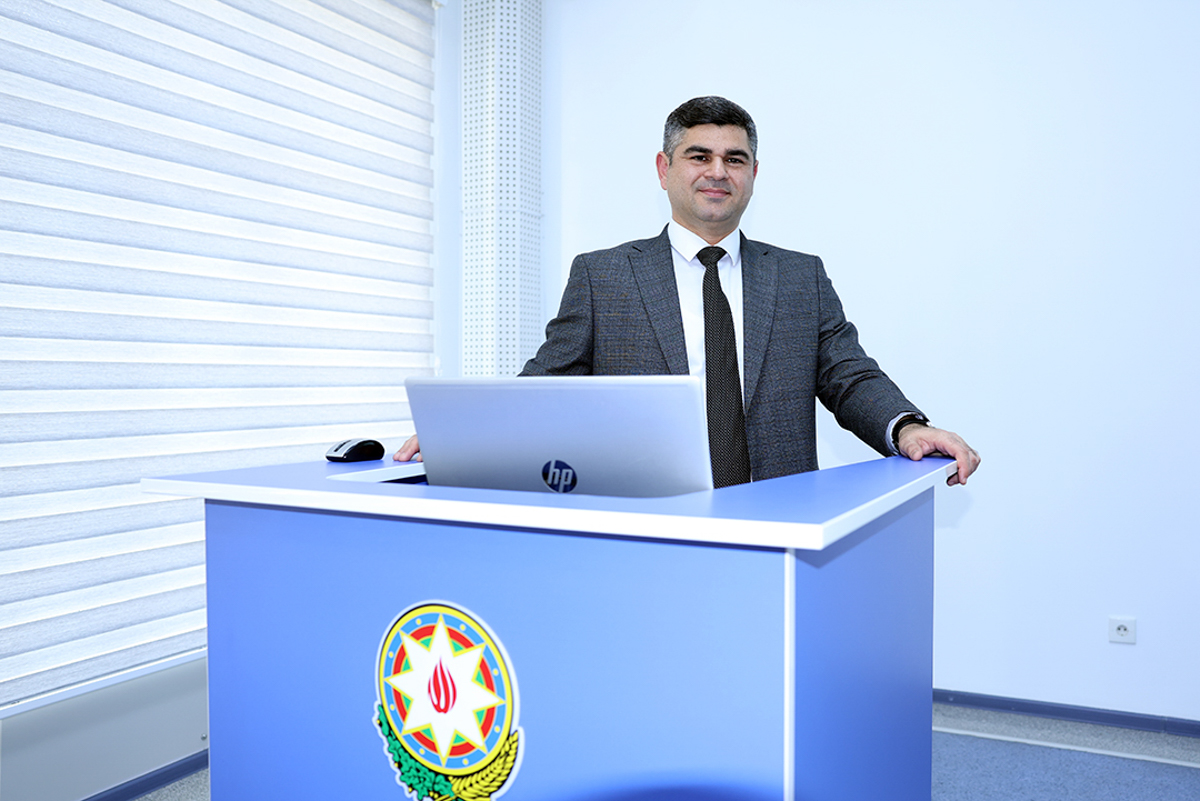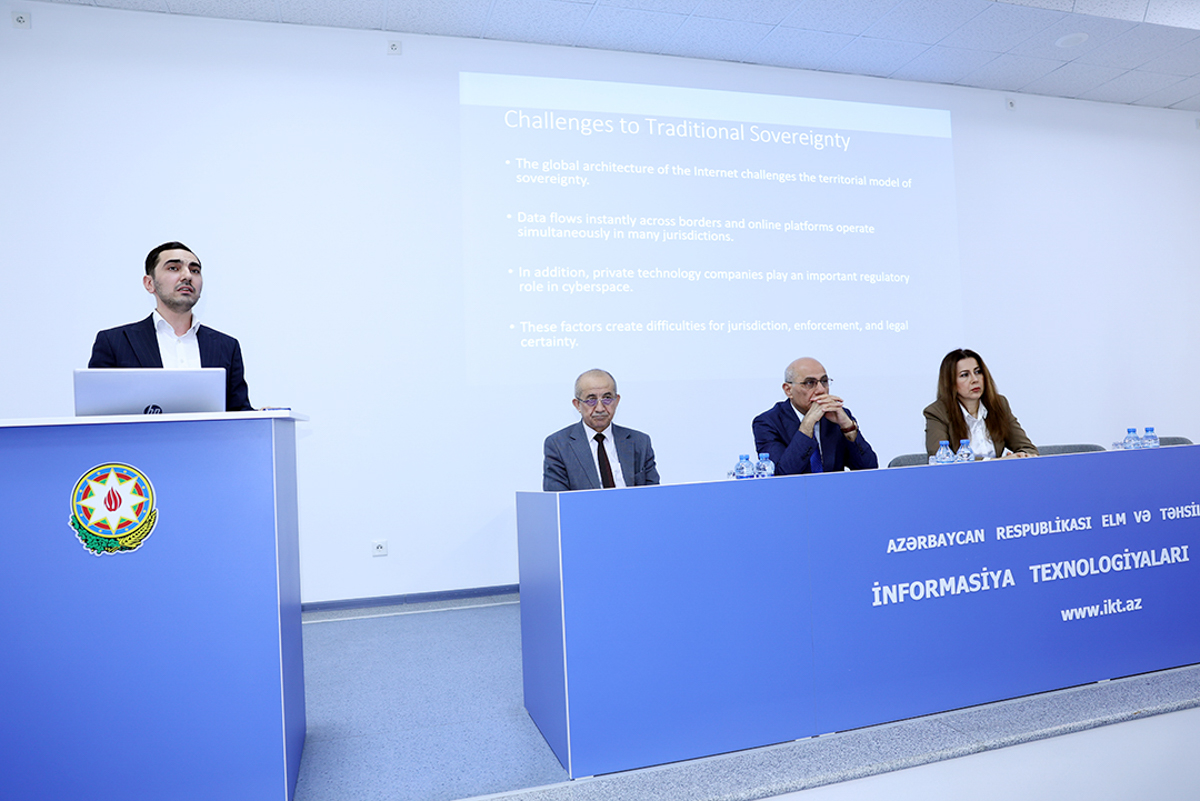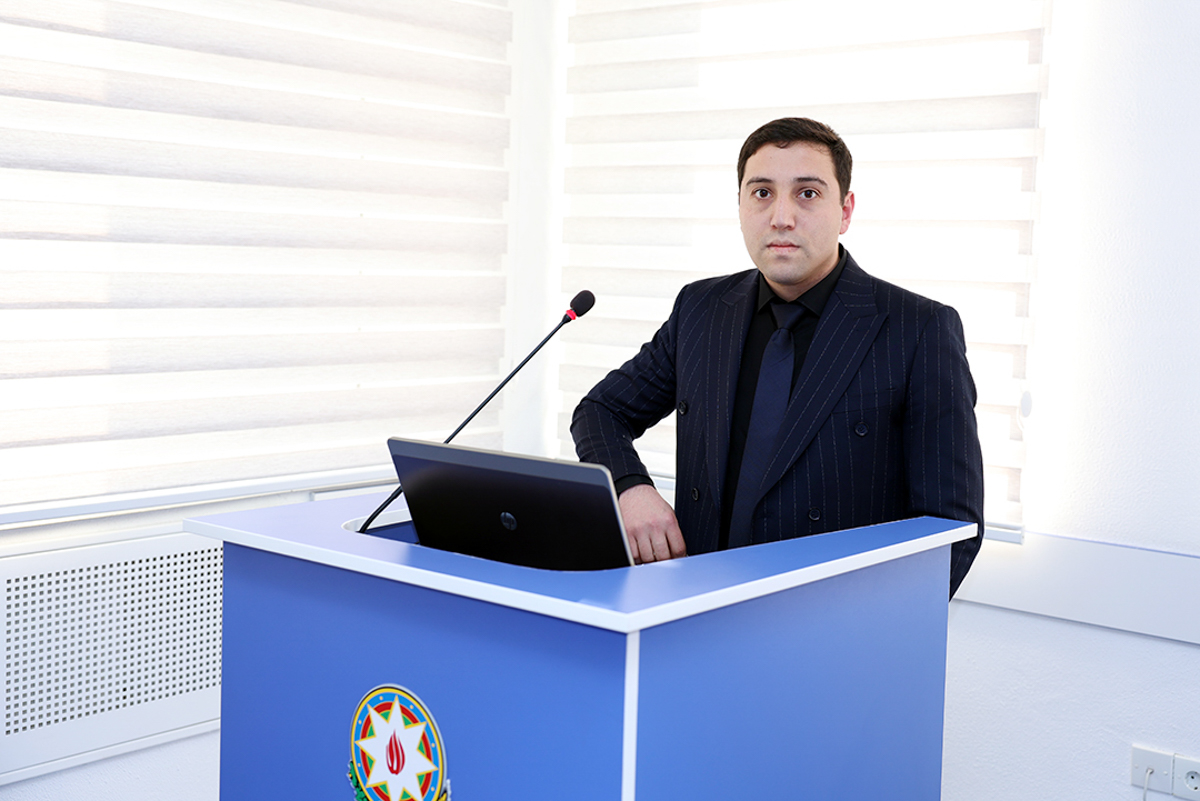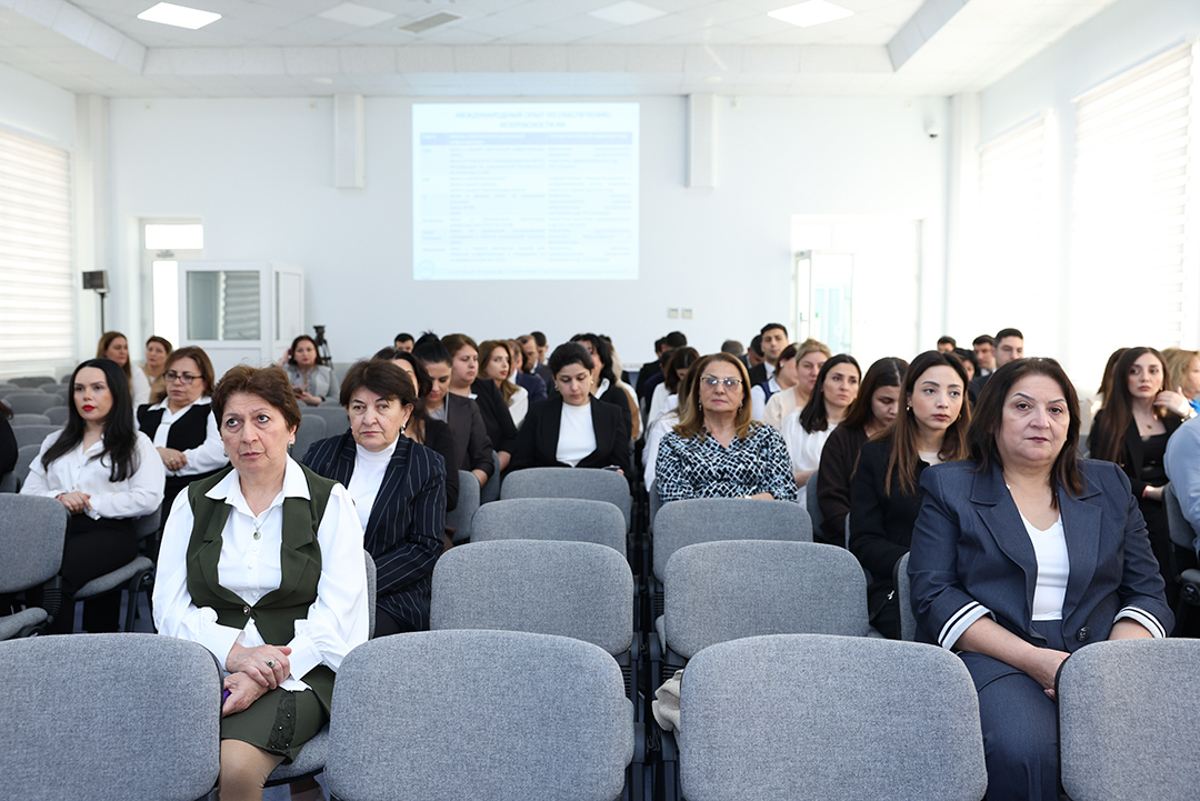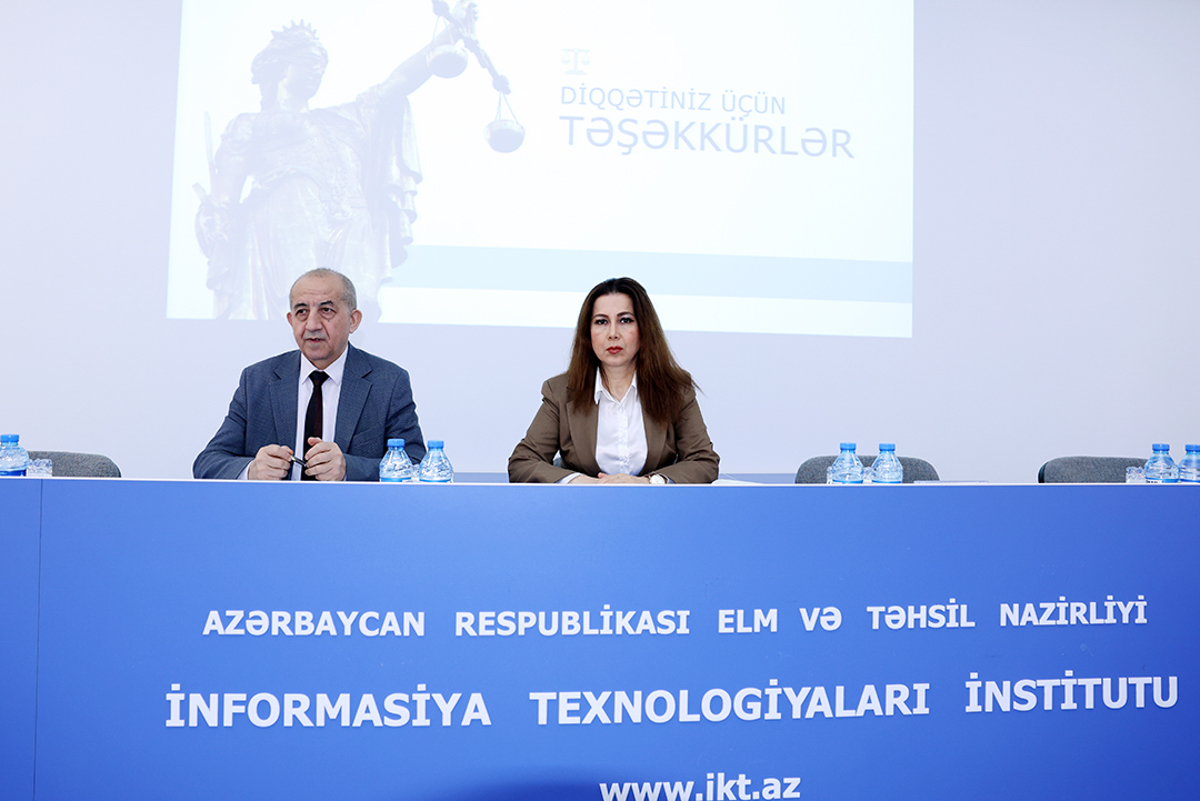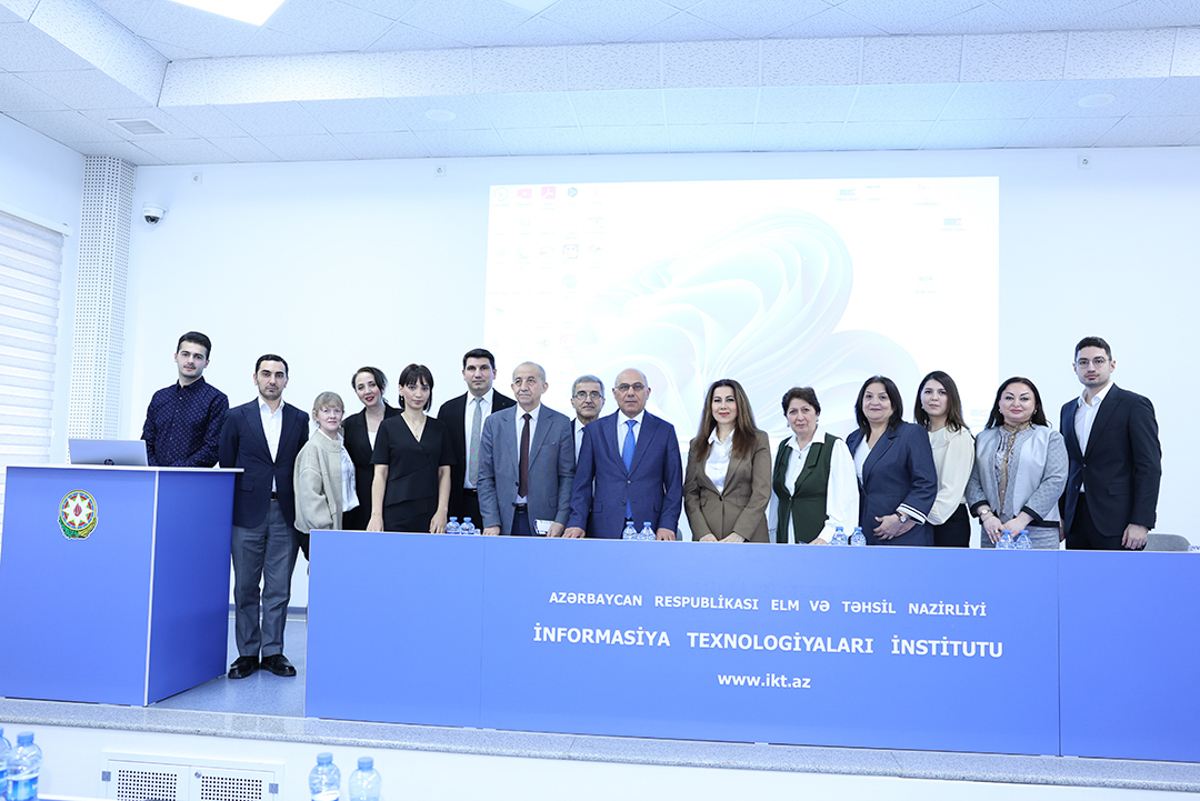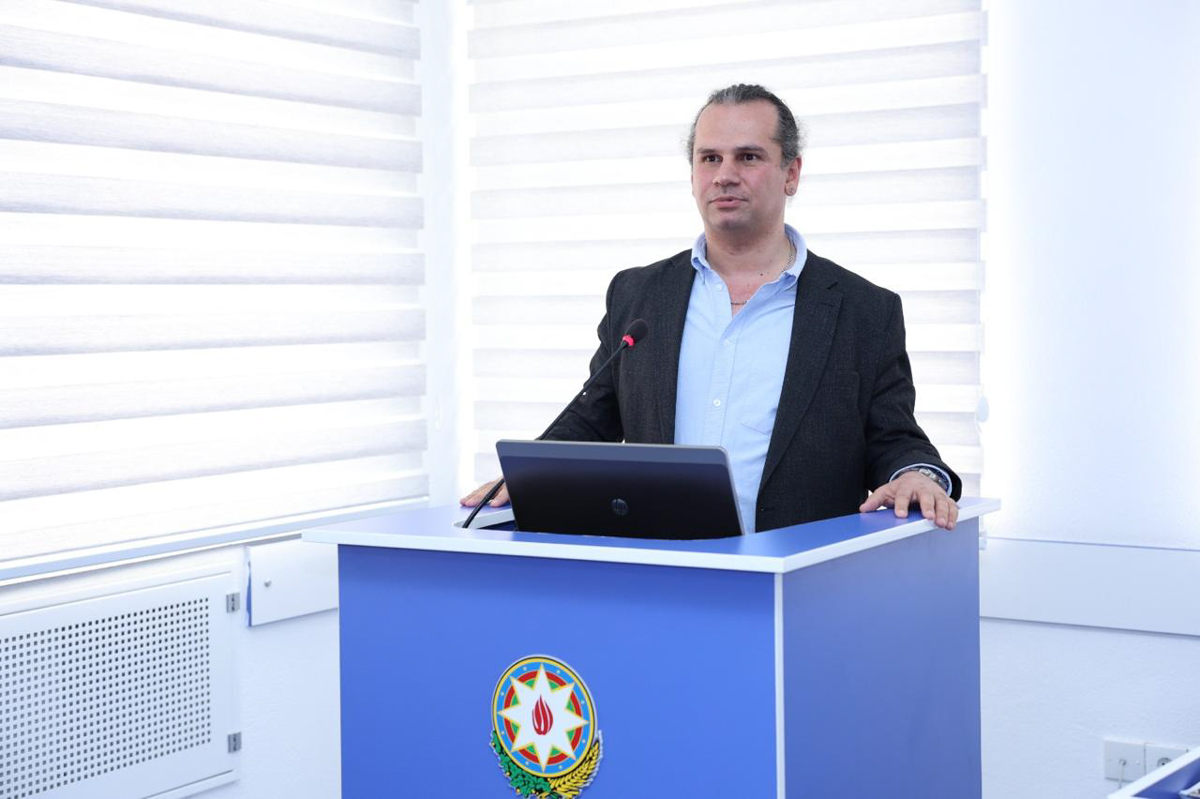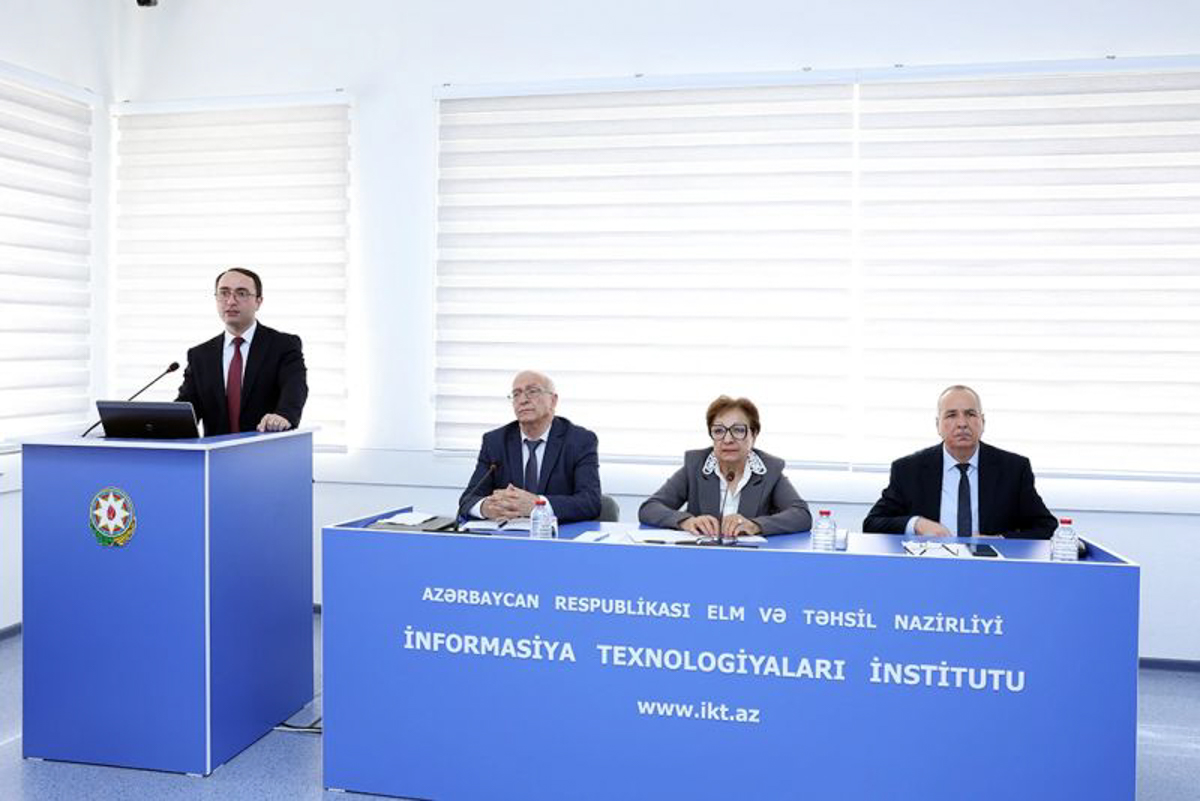

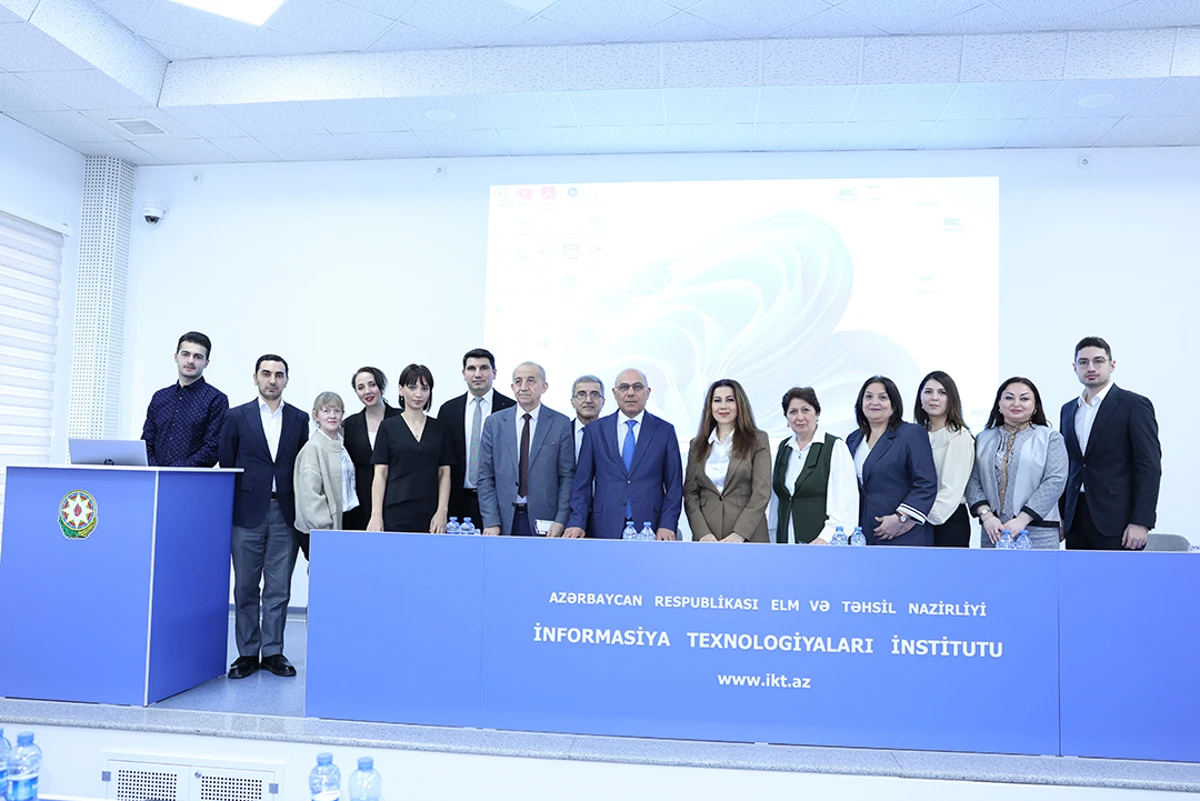
On 5 March, a national conference titled “Scientific and Practical Challenges of Ensuring State Cyber Sovereignty” was held, jointly organized by the Institute of Information Technology of the Ministry of Science and Education, the Heydar Aliyev Academy of the State Security Service, Azerbaijan Technical University, and the Association of Cybersecurity Organisations of Azerbaijan (AKTA).
Within the framework of the conference, two panel sessions were organized. The session titled “Scientific and Technological Aspects of Ensuring State Cyber Sovereignty” was co-chaired by Corresponding Member of ANAS Ramiz Aliguliyev and Doctor of Technical Sciences Yadigar Imamverdiyev, with PhD in Engineering Fargana Abdullayeva serving as scientific secretary. The second session, “Scientific, Political, Legal and Organizational Aspects of Ensuring State Cyber Sovereignty,” was co-chaired by Corresponding Member of ANAS Masuma Mammadova and PhD in Engineering Ziyafat Amirov, with PhD in Engineering Ramiz Shikhaliyev acting as scientific secretary.
During the conference, AKTA members and experts delivered presentations covering a range of topical scientific issues, including cyber sovereignty, cryptography, cybersecurity of critical infrastructure, digital sovereignty, data protection, and security operations centers. The presentations addressed key challenges related to safeguarding state sovereignty in cyberspace, strengthening national security systems, and ensuring the secure management of information technologies in the modern digital environment.
The key presentations delivered during the event included:
- Lala Karimova – “Digital Sovereignty Index of Azerbaijan: Analytical and Methodological Approach”
The presentation introduced analytical and methodological approaches for measuring Azerbaijan’s level of digital sovereignty. It outlined principles for constructing an index based on indicators such as digital infrastructure development, data governance, adoption of national technologies, and cybersecurity metrics, aiming to support strategic decision-making.
- Yadigar Imamverdiyev – “Cryptography Roadmap for National Cyber Sovereignty”
This presentation highlighted the strategic importance of cryptography in ensuring national cyber sovereignty and proposed a phased roadmap for the development and implementation of national cryptographic standards to secure communications, protect data, and safeguard critical systems.
- Yadigar Imamverdiyev – “Adaptive Cybersecurity in the Energy Sector: Dynamic Risk Models”
The presentation explored adaptive cybersecurity approaches and the application of dynamic risk models for cyber-physical systems in the energy sector, emphasizing AI-driven and analytical security mechanisms to enhance resilience against increasing cyber threats.
- Araz Mustafayev – “Multi-Criteria Assessment of Risks in Cross-Border Transfer of Personal Data in Social Cyber-Physical Systems”
This presentation analyzed security and privacy risks associated with cross-border data transfers in cyber-physical systems and proposed the use of multi-criteria decision-making methods to strengthen data protection mechanisms.
- Bahruz Aliyev – “A Multi-Dimensional Approach to State Cyber Sovereignty”
The speaker emphasized that cyber sovereignty is a complex concept encompassing not only technical, but also legal, political, and institutional dimensions, highlighting the importance of regulatory frameworks, national technological capabilities, and international cooperation.
- Aida Mustafayeva – “Methodological Approaches to Ensuring Data and Cloud Sovereignty in Digital Public Services”
The presentation examined data and cloud sovereignty issues in the context of digital government services, underlining the importance of secure data storage, national cloud infrastructure development, and domestic data governance.
- Tabriz Jafarov – “Transformation of State Sovereignty in the Digital Era: Theoretical and Practical Challenges of Cyber Sovereignty”
This presentation explored how digitalization impacts the concept of state sovereignty, analyzing states’ rights, responsibilities, and security challenges in cyberspace.
- Rashad Aliyev – “Design of a Real-Time Attack Visualization System for Security Operations Centers”
The presentation introduced design principles for systems enabling real-time monitoring and visualization of cyber incidents in SOCs, highlighting their role in accelerating analytical decision-making and early threat detection.
- Rahib Aghabayev – “Inventory-Level Triage for Android Logical Images: Automated Artifact Classification”
This presentation addressed the optimization of digital forensic processes through automated classification of artifacts in Android logical images, aiming to improve the speed and efficiency of cyber incident investigations.
- Mammad Mammadov – “Common Cloud of Turkic States: Digital Sovereignty and Security”
The presentation discussed the importance of establishing a shared cloud infrastructure among Turkic states to strengthen digital sovereignty, enhance regional cooperation, and ensure secure data management.
The conference was recognized as an important platform for discussing both scientific and practical aspects of cyber sovereignty, as well as for fostering stronger collaboration between the academic and professional communities in this field.